by the end of
US
・UK
A1
phr.PhraseNo later than; at or before the termination of a specified period.
By the end of the year, I want to have saved enough money for a down payment on a house.
Video subtitles
Be Professional! Never say this at work! ❌
- But what if you can't get it done by two pm or by the end of the day?
But what if you can't get it done by two pm or by the end of the day?
- or by the end of the day?
or by the end of the day?
Cannabis: Thailand Wants to Ban Recreational Marijuana

- The government is now planning to kill the bars with a ban on recreational use planned by the end of the year.
The government is now planning to kill the bars with a ban on recreational use planned by the end of the year.
- the bars with a ban on recreational use planned by the end of the year.
the bars with a ban on recreational use planned by the end of the year.
Articles - 'a', 'an' and 'the' | English Grammar

- By the end of these two lessons you will have a much better idea
By the end of these two lessons you will have a much better idea
- By the end of these two lessons you will have a much better idea
By the end of these two lessons you will have a much better idea
Emma Watson on Being Hit with Snowballs & Meeting Idol Celine Dion

- And, like, to be honest, by the end of it, we were so concerned that this—this poor guy was under so much pressure.
And, like, to be honest, by the end of it, we were so concerned that this—this poor guy was under so much pressure.
- AND TO BE HONEST, BY THE END OF
AND TO BE HONEST, BY THE END OF
Phases of Meiosis
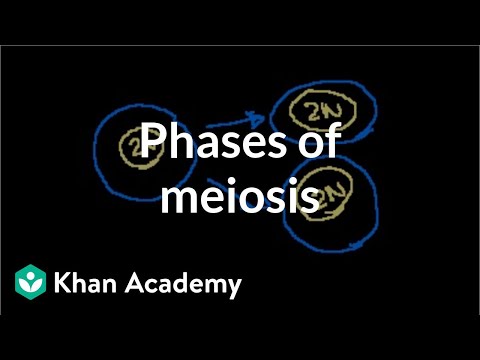
- So by the end of telaphase I, so you have this the actual cytoplasm is splitting during telaphase right there.
So by the end of telaphase I, so you have this the actual cytoplasm is splitting during telaphase right there.
- And by the end of telaphase I, it will have completely divided.
And by the end of telaphase I, it will have completely divided.
30 Truths I Know at 30 But Wish I Knew at 20
- Instead of saying, "I can get this done by the end of next week," say "I can get this done by the end of today."
Instead of saying, "I can get this done by the end of next week," say "I can get this done by the end of today."
Sam Altman: there’s no “magic red button” to stop AI
- there are no jobs by the end of the year”
there are no jobs by the end of the year”
Google I/O '24 in under 10 minutes

- By the end of the year, AI Overviews will come to over a billion people.
By the end of the year, AI Overviews will come to over a billion people.
Simple Idea At The Heart Of Great Photography
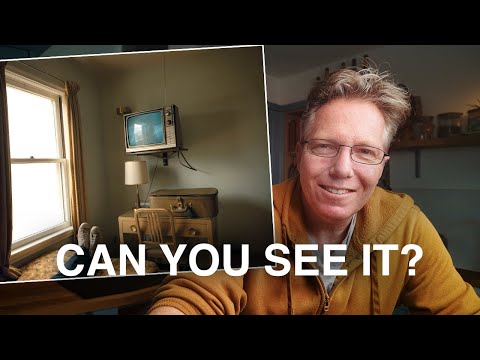
- Which of these do you think you're gonna remember more by the end of this video, but why?
Which of these do you think you're gonna remember more by the end of this video, but why?
- Which of these do you think you're going to remember more by the end of this video?
Which of these do you think you're going to remember more by the end of this video?
The Story of: Gerhard Richter (1932–Today)
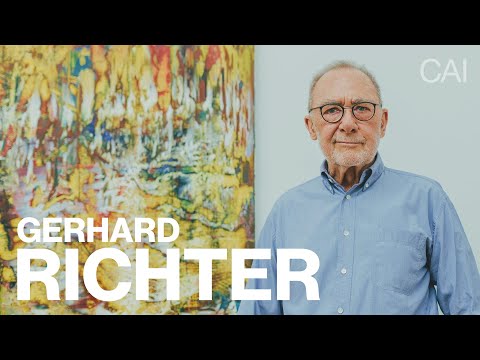
- Emma, nude on a staircase, one of his most famous works he ever painted, and he took on geometric abstraction with his colour chart, influenced by his friend Blinky Palermo, but also influenced by pop art and minimal art. Richter had already been experimenting with abstraction and minimal painting, think of the abstracted blur or washed out zones of oil paint, but also depicting very minimal elements, such as curtains, tubes, turning sheets or daily objects. The colour charts were copies of paint sample cards, which paved the way for Richter's future abstract paintings. After Emma, nude on a staircase, Richter would paint several erotic nudes in 1967, followed by cityscapes, aerial views, mountains, starscapes, clouds, seascapes and landscapes in 1968 and 1969. With these artworks, there is this notion of both an almost nostalgic romanticism and an ongoing exploration of abstraction. He would paint many shadow pictures, corrugated iron as a geometric abstract work, grey monochromes, colour streaks and grit, arriving at pure abstraction and questioning the limits of representation. By the end of the decade, Richter had established himself as a contemporary artist, participating in group exhibitions across the globe. In 1969, he was included in the exhibition Nine Young Artists at the Solomon R. Guggenheim Museum in New York, his first show at a major institution. However, Richter was still unsure about his future and in search for a specific direction, so his paints and the experiments would continue.
Emma, nude on a staircase, one of his most famous works he ever painted, and he took on geometric abstraction with his colour chart, influenced by his friend Blinky Palermo, but also influenced by pop art and minimal art. Richter had already been experimenting with abstraction and minimal painting, think of the abstracted blur or washed out zones of oil paint, but also depicting very minimal elements, such as curtains, tubes, turning sheets or daily objects. The colour charts were copies of paint sample cards, which paved the way for Richter's future abstract paintings. After Emma, nude on a staircase, Richter would paint several erotic nudes in 1967, followed by cityscapes, aerial views, mountains, starscapes, clouds, seascapes and landscapes in 1968 and 1969. With these artworks, there is this notion of both an almost nostalgic romanticism and an ongoing exploration of abstraction. He would paint many shadow pictures, corrugated iron as a geometric abstract work, grey monochromes, colour streaks and grit, arriving at pure abstraction and questioning the limits of representation. By the end of the decade, Richter had established himself as a contemporary artist, participating in group exhibitions across the globe. In 1969, he was included in the exhibition Nine Young Artists at the Solomon R. Guggenheim Museum in New York, his first show at a major institution. However, Richter was still unsure about his future and in search for a specific direction, so his paints and the experiments would continue.
- Germany and terrorist attacks in the 1970s, a topic which was Richter's most provocative and politically charged body of work up to this day. His abstract works developed towards his characteristic technique using a large squeegee instead of a paintbrush, pushing the colour across the surface, creating new depths, textures and contrasts. The variety of his oeuvre could easily have been a pitfall for Richter's career, but in the end, it was his greatest strength. During the 1980s, and in particular by the end of the decade, Richter achieved true international recognition. In 1985, he received the Oskar Kokoschka Prize and had his first major retrospective, and by the turn of the decade, he was being represented by industry-leading galleries, such as Marion Goodman in New York, or Anthony Dauphine in London.
Germany and terrorist attacks in the 1970s, a topic which was Richter's most provocative and politically charged body of work up to this day. His abstract works developed towards his characteristic technique using a large squeegee instead of a paintbrush, pushing the colour across the surface, creating new depths, textures and contrasts. The variety of his oeuvre could easily have been a pitfall for Richter's career, but in the end, it was his greatest strength. During the 1980s, and in particular by the end of the decade, Richter achieved true international recognition. In 1985, he received the Oskar Kokoschka Prize and had his first major retrospective, and by the turn of the decade, he was being represented by industry-leading galleries, such as Marion Goodman in New York, or Anthony Dauphine in London.